Had Hemingway, probably the better writer, written this piece, he would have begun the day right there. With the alarm at five. With the soft patter of light rain, which for any farmer means trouble on the way. With numb hands. With the fruits of one's labour. And he would have ended in an endlessly long paragraph on the merits of a clear, faintly sweet Riesling from the Danube basin, with its metallic note, set against a more mineral, rougher white, a deeper yellow out of the mountains.
I am not Hemingway. And to be honest: even a few hours later I was still so tired that I could not have managed a single sentence or description of his kind.
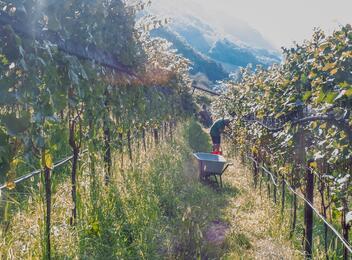
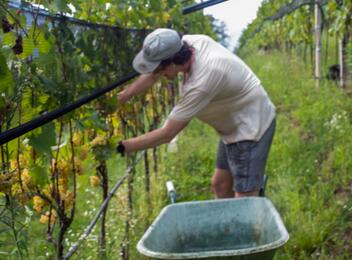
In South Tyrol we are always glad to help one another out among neighbours. And for a Speckmarende, the local snack of speck and a glass to go with it, we will do just about anything. This year, too, it drove the sommelier out of his cool cellar to help Baron Vorberg bring in his harvest. It had to be quick: rain was forecast for the evening, and the clean, handsome fruit, already ripe, would probably not have survived even a light shower over the weekend. So people help each other in the village, even when that means getting up early.
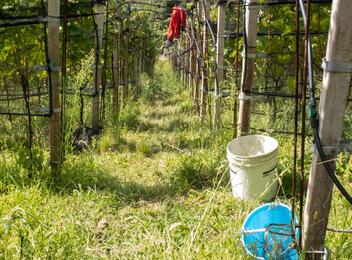
The Baron is not really a baron, and if he is, a very poor one, with that small plot of his. How small exactly? One does not discuss hectares. Let us put it this way: the harvest was in after a single day.
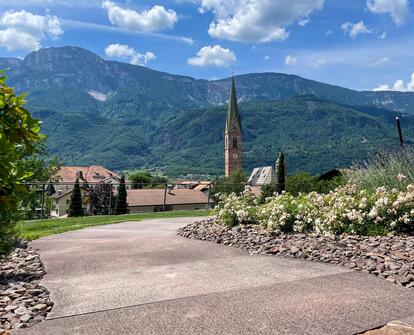
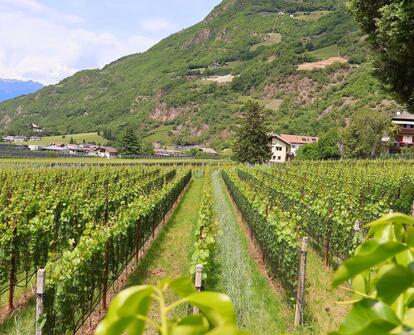
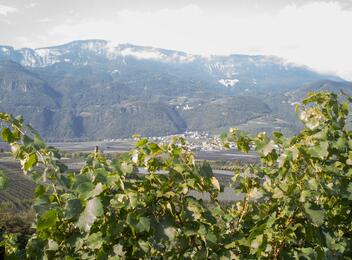
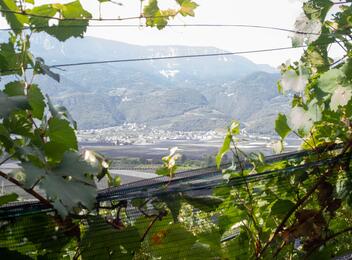
So much for the Baron. But where does Vorberg come from? The Vorberg, better known as the “guate”, the good Pinot Bianco of Kellerei Terlan, is the hill at whose foot the Baron's vines lie. Fairly warm, generously served by the sun, perhaps the finest site in Vilpiano. Of course Baron Vorberg is not called Baron Vorberg. And in fact nobody calls him that. Yet somehow the name fits. The picture one forms of the man fits better than any description could.
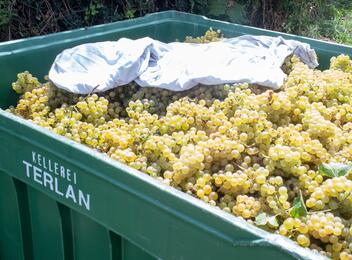
Then why Chardonnay, when the hill is famous for Pinot Bianco? You should not really say this to a South Tyrolean: the better wines are made, sadly, by Chardonnay. It is the nobler variety, Pinot Bianco the more rustic one.
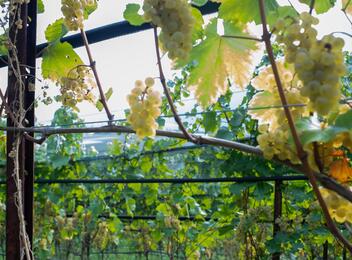
Work like that in the vineyard is almost a pleasure. The grapes were of such quality that the only improvement would have been for them to have “gewimmt” themselves (gewimmt, South Tyrolean dialect from wimmen, to harvest). A shame, really; as I said, farmers always find something to grumble about.
Because for the most part we follow rhythms we set ourselves: the timetables of buses and trains, the deadlines we have to meet, whether at the office or at work, the reservations at the restaurant. And although strawberries really only exist in summer, the supermarket has them all year round. Among all the comforts and difficulties of daily life it is easy to forget that nature follows other rhythms. How often do we catch ourselves cursing the bad weather? How often do we long for summer in winter, and in this summer for winter?
In farming it is man who sets the rhythm, but nature still steers it. He may talk of phenolic, aromatic and physiological ripeness for as long as he likes; in the end nature dictates the harvest window. And for the hundredth time, so that everyone hears it: climate change is long since here. Ripe Chardonnay in August, those are the conditions of a summer whose images have burned themselves into our minds.
South Tyrol was lucky, there is no other way to describe it. The quality of the grapes: outstanding. The farmer always has an inclination to complain. Should he dare to do so again this year, he is welcome to look towards Bordeaux: forty degrees in June, wildfires in July.
After a year like this I would suggest we take the harvest as it came and count ourselves fortunate. Naturally I cannot speak for every vineyard in South Tyrol. But I must pay the dear Baron a compliment: whoever worked cleanly and attentively through the year could enjoy a quality this year that is anything but a given.
The fruits of our labour, or in this case the grapes of this year, make next year's wine. How it will taste we will only learn the year after. Yet the anxious wait is eased by the certainty that last year's fruit makes the wine we are drinking now.
It is all in now. I have no doubt that the wine awaiting us was worth every effort and every drop of sweat of this year. And while other varieties are still to come, of the Baron's Chardonnay I can say: an excellent vintage. Who knows, perhaps a vintage of the century.